

One has an extra arm. One usually has a curved shape. And the internet has spent years making both sound like a tiny appliance with a university degree. Let’s make this simpler.
A rabbit vibrator usually combines an insertable shaft with a smaller external arm designed to rest against the clitoris. A G-spot vibrator usually has a curved or angled head intended for internal pressure or stimulation toward the front vaginal wall. Those are design descriptions, not promises about anyone’s body. What feels good varies, and a toy never has to be used in every way its product category suggests.
What is the actual difference?
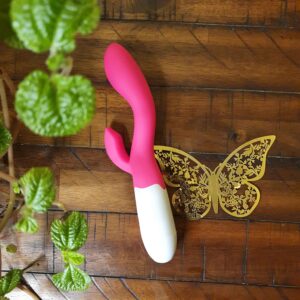
Think of a rabbit as a two-part design. The main shaft and the external arm may be controlled together or separately, depending on the model. That gives you a chance to explore two kinds of sensation in one session. The trade-off is that the angles need to suit your body and the toy needs to feel comfortable to hold and position.
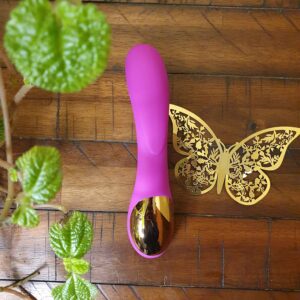
A G-spot style keeps the attention on one main shape. Its curve can make it easier to angle toward a particular area, while a simpler design may feel less busy in the hand. Some versions include extra textures or functions, so read the listing carefully instead of assuming every toy with the label behaves alike.
The phrase “G-spot” is commonly used in product descriptions, but it is not a magic button or a test your body has to pass. If a particular kind of internal stimulation is not your thing, that is useful information, not a user error.
Choose by sensation, not by the category name
- You like external stimulation too: a rabbit gives you an external arm to explore. Check whether its position and flexibility look comfortable for you.
- You want one main point of contact: a curved G-spot style may be easier to guide without coordinating an extra arm.
- You are unsure about internal use: there is no rule that says you must insert a toy. External play is a complete plan.
- You prefer fewer controls: check the button layout and whether the motors are controlled separately. More settings can be fun, but nobody needs a control panel worthy of an aircraft.
- You care about size and grip: compare the actual dimensions and handle shape. Product photos can make a toy look smaller or larger than it is.
Choose the shape that seems easiest to hold, angle and pause. The most impressive feature list is not useful if the controls are fiddly or the toy does not feel comfortable.
Three details to check before buying
1. Controls and power
Look for how many motors a model has, whether its functions operate independently, and how it charges or takes batteries. A rabbit may have separate controls for its shaft and external arm, but check that specific listing. If you would rather keep things simple, a single-focus shape may be an easier place to start.
It is also worth asking how you will operate it while holding it. A button that is easy to find by touch can matter more in the moment than an enormous number of patterns. Think about whether you want a quiet setting, a travel lock, or rechargeable power, and verify those features on the product page rather than relying on category assumptions.
2. Materials and care
Use the care instructions that come with the exact toy. Planned Parenthood recommends washing toys with mild soap and water, while noting that care instructions can differ by product. It also says sharing toys can pass infections through bodily fluids, so clean between partners or use a fresh condom on the toy. Its overview of sex toys and safer use is a helpful reference. Do not assume a toy is waterproof or compatible with every lubricant unless its product details say so.
3. Lube and a low-pressure first try
A little water-based lubricant can make internal play more comfortable for many people. Add it gradually, start gently, and stop if something hurts or feels wrong. If internal sensation is not enjoyable, move to external play or put the toy away. Pleasure is not a homework assignment.
Some people like to try a toy alone first, simply to learn where its buttons are and how it feels in their hand. Others prefer to explore with a partner. Neither choice says anything about the quality of a relationship or how experienced someone is. Choose the setting that gives you the most room to communicate and adjust.
If you are still comparing basics, our journal guide hub has more beginner-friendly toy advice. And if you already know the broad shape you want, compare the real dimensions and controls on each product page.
Three shapes to compare
These examples show different approaches, from a classic two-part rabbit to a focused curved design. Check each listing for the current controls, dimensions and care details.

Still choosing?
Start with the sensation you are curious about, then compare shape and controls. If you want help finding a product detail, contact The Freaky Link.
This article is general educational content for adults, not medical advice. Follow the instructions supplied with each product.